XPEL Tint vs 3M Crystalline · North Phoenix
3M Crystalline vs XPEL Window Tint
Shopping for XPEL tint in Phoenix? Compare XPEL PRIME XR PLUS and 3M Crystalline: how each one stops heat, what’s legal in Arizona, warranty, and cost.
XPEL is one of the best-known names in window film and paint protection, and its PRIME ceramic tints are popular across the Valley. If you’re searching for XPEL window tint in North Phoenix, you’re already shopping for quality. Before you choose, it’s worth seeing how each film stops the Arizona sun, because that changes how your glass and cabin feel on a 115° afternoon.
Reflect vs Absorb
Bounce the Heat Back, or Soak It Up?
XPEL’s published solar data
| Film (shades) | Solar absorbance | Solar reflectance |
|---|---|---|
| PRIME XR PLUS (70 to 5) | 58% to 90% | 6% to 7% |
| PRIME XR (XR Black, 70 to 5) | 57% to 83% | 6% to 7% |
Lighter shades absorb less, darker shades more. Measured by XPEL on 3 mm glass (EN 410).
Source: XPEL PRIME XR PLUS product specifications, XPEL PRIME™ USA Specification Sheet (Rev. 05/23). View XPEL’s spec sheet · All XPEL specs
Simplified illustration, not to scale. Every film reflects some energy and absorbs some; the difference is which does most of the work. *3M published data[1]. XPEL absorbance per XPEL data sheets[4]. Values vary by shade.
3M Crystalline: Reflects
Crystalline is built on 3M’s proprietary multilayer optical film: over 200 layers in a film thinner than a Post-it® Note[1]. 3M’s engineers tune those layers so the stack reflects near-infrared, the part of sunlight you feel as heat, while visible light passes through[5]. Crystalline pairs that optical film with 3M ceramic nano-technology[3], so it turns back infrared heat while keeping a clear, factory look.
XPEL PRIME XR Ceramic: Mainly Absorbs
XPEL PRIME XR and PRIME XR PLUS are nano-ceramic films that mainly absorb infrared: XPEL’s own data sheets list absorbance as the largest share of the solar energy these films stop, well ahead of reflectance[4]. Absorbed energy doesn’t disappear: it warms the film and glass, then leaves by conduction, airflow and re-radiation, toward the outside and into the cabin[6]. That’s why absorbing glass can feel warm on a hot day.
XPEL XR Plus vs 3M Crystalline
XPEL PRIME XR PLUS vs 3M Crystalline: What Phoenix Drivers Should Know
Both are premium, non-metal films
XPEL describes PRIME XR PLUS as a multi-layer nano-ceramic film with no metal-based signal interference[10]. 3M Crystalline is non-metalized too, so it won’t interfere with phones, GPS or 5G[1]. Either way, your electronics are fine.
The real difference is how they stop heat
Crystalline’s optical layers are built to reflect infrared away[5]. XPEL’s PRIME XR films mainly absorb it, according to XPEL’s own data sheets[4]. That’s the difference you can feel on hot glass.
Read spec sheets carefully
Brands measure infrared differently. 3M’s IR rejection figure covers 900–1,000 nm on film alone[2]; XPEL’s is taken at a single 1,025 nm wavelength[4]. Wide-band IRER and total solar energy rejected tell you more than one headline IR number.
Choose a legal shade for Arizona
Front side windows have a legal limit in Arizona[9]. A film that rejects a lot of heat in a light shade lets you stay legal without giving up comfort.
The installer matters
Clean edges, no contamination and a precise fit come from the shop, not the box. Our North Phoenix team has over 20 years of experience at our 3M Authorized Expert Shop.
Feel it before you buy
Spec sheets only go so far. Put your hand under our heat display and compare 3M Crystalline with standard film yourself.
Why Reflection Matters in Arizona Heat
Hot Glass, Heat Soak and Your Cabin
When a film absorbs infrared, that energy warms the film and glass. Warm glass then sheds heat by conduction, airflow and re-radiation, toward the outside and into the cabin[6]. After a few hours parked in a North Phoenix lot, that’s heat soak you feel the moment you open the door.
Reflection works earlier: infrared turned back at the glass never becomes heat in the glass. 3M says Crystalline’s heat rejection helps cool a vehicle by 47°F (26°C)[1].
For EV drivers, every bit of heat kept out of the cabin is heat the car’s cooling system doesn’t have to remove.
Clarity and a Factory Look
Stay Light, Stay Legal, Stay Cool
3M Crystalline rejects more heat than many dark films without changing your vehicle’s appearance[1]. That matters in Arizona, where the front door glass can’t go dark. You keep a clear, factory look and still block up to 99% of heat-producing infrared rays.
We’ll help you pick a Crystalline shade that keeps your front windows within the limit once it’s on your glass.
Arizona Window Tint Law at a Glance
- Front side windows
- Film plus glass must let through 33% of light (plus or minus 3%), with luminous reflectance of no more than 35% (plus or minus 3%)[9].
- Rear side & rear windows
- Any darkness, with luminous reflectance of no more than 35% (plus or minus 3%). The rear window needs outside mirrors on both sides[9].
- Medical exemption
- Available from ADOT with a physician’s written attestation[9].
Summary of ARS § 28-959.01 for general information, not legal advice.
3M Crystalline by the Numbers
Independent testing: in a 2023 Korea Consumer Agency test of 39 automotive films, 3M Crystalline 70 was one of just two films with 70%+ visible light transmission rated top for limiting temperature rise[7].
Warranty and the 3M Name
A 3M Limited Lifetime Warranty
3M Crystalline is backed by 3M’s limited lifetime warranty for as long as you own your vehicle[8]. If the film is found defective, 3M covers replacement film and reapplication labor[8].
3M received its first sun control window film patent in 1966[1]. At Optima, Crystalline is installed at our 3M Authorized Expert Shop in North Phoenix by a team with over 20 years of experience.
Tesla, Lucid and EV Glass Roofs
More Glass Means More Heat
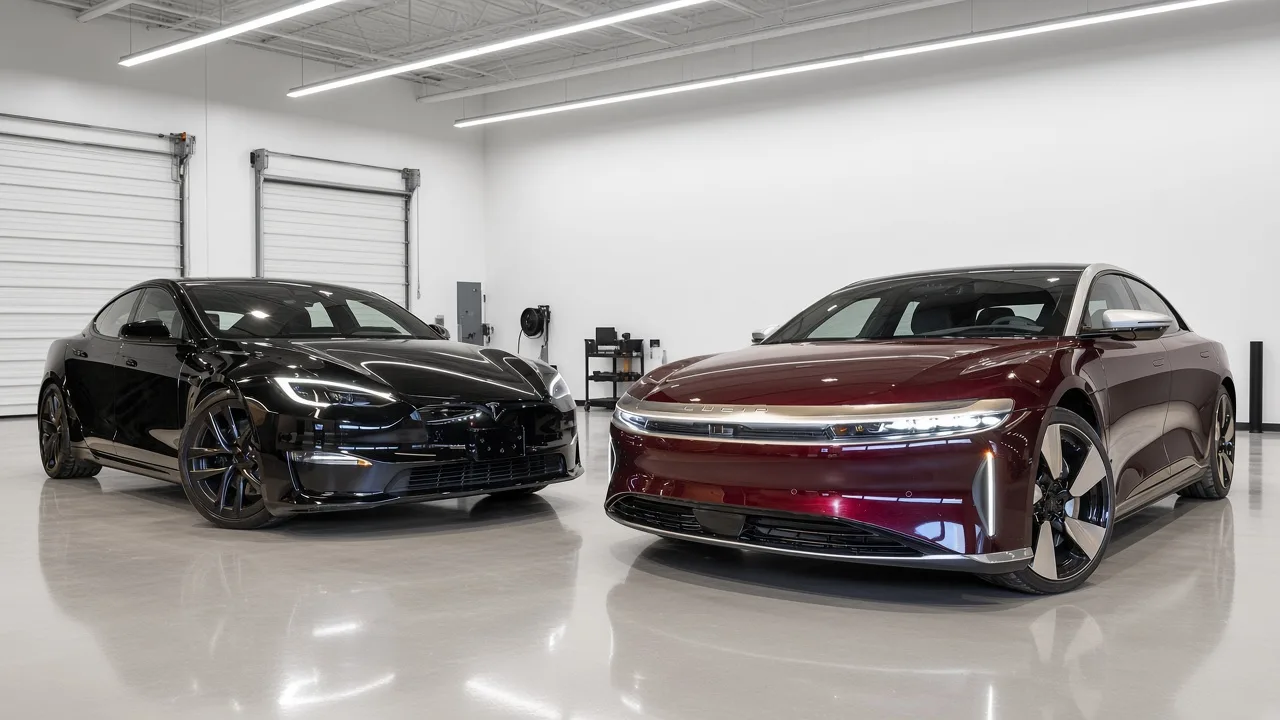
Teslas and Lucids carry more glass than almost anything on the road, including full glass roofs. Under the Arizona sun, that glass is where your cabin heat comes from.
Crystalline keeps the open, factory look your EV was designed with while turning back the infrared you feel as heat. Panoramic and glass roofs are quoted separately, and we’ll walk you through the options for your model.
Get a Tesla or Lucid Tint QuoteWhy North Phoenix Drivers Choose Crystalline
Built for Arizona Heat
North Phoenix summers are relentless. Crystalline is 3M’s highest heat-rejecting automotive film, blocking up to 99% of heat-producing infrared rays.[1]
Made for Tesla & Lucid Glass
Teslas and Lucids carry huge glass areas. Crystalline keeps that open, factory look while turning back the infrared you feel as heat. Roof glass is quoted separately.
A Clear, Factory Look
Rejects more heat than many darker films without changing your vehicle’s appearance, so you don’t have to go dark to stay cool.[1]
3M Limited Lifetime Warranty
A limited lifetime warranty backed by 3M, for as long as you own your vehicle.[2]
3M Authorized Expert Shop
Installed by our North Phoenix team with over 20 years of experience, at our 3M Authorized Expert Shop on Cave Creek Rd.
XPEL Tint Cost vs 3M Crystalline
What Does XPEL Tint Cost vs 3M Crystalline in Phoenix?
XPEL tint pricing varies by shop, vehicle, shade and how many windows you cover, so the best comparison is a written quote for your car. At Optima, 3M Crystalline starts at $750.
Feel the Difference at Our Heat Display
Pictures help, but your hand tells the truth. Stop by our North Phoenix studio and put your hand under our heat display. Compare 3M Crystalline side by side with standard film and feel how much heat it stops.
3M Crystalline at Optima
Starting at $750
Sunroof or glass roof tint quoted separately. Final pricing is confirmed after we inspect your vehicle.
XPEL vs 3M Tint: FAQ
Is XPEL or 3M window tint better?
Both are respected brands, and both make non-metal films with strong UV protection. The biggest difference is how they stop heat: 3M Crystalline’s multilayer optical film reflects infrared back outside, while XPEL PRIME XR and XR PLUS ceramic films mainly absorb it into the film and glass, according to XPEL’s own data sheets. We specialize in 3M, and for the Arizona sun we recommend 3M Crystalline. Come feel the difference at our heat display in North Phoenix.
Is XPEL tint worth it?
XPEL PRIME XR and XR PLUS are well-regarded ceramic films, and many drivers are happy with them. If what matters most to you is turning heat back at the glass while keeping a light, factory look, compare 3M Crystalline before you decide. Our heat display lets you feel the difference in a couple of minutes.
Is XPEL tint ceramic?
Yes. XPEL describes PRIME XR PLUS as a multi-layer nano-ceramic window film. 3M Crystalline takes a different approach: a multilayer optical film with over 200 layers, paired with 3M ceramic nano-technology.
What is the difference between XPEL XR Plus and 3M Crystalline?
XPEL XR PLUS is a nano-ceramic film that, per XPEL’s data sheets, stops solar energy mainly by absorbing it. 3M Crystalline uses a 200+ layer multilayer optical film engineered to reflect infrared, and 3M rates it to block up to 99% of heat-producing infrared rays. Both are non-metal and signal-friendly.
Is 3M Crystalline worth it?
For Arizona drivers who want serious heat rejection without dark windows, we think so. Crystalline is the highest heat-rejecting 3M automotive film, blocks up to 99.9% of UV, and is backed by a 3M limited lifetime warranty for as long as you own your vehicle.
What is the difference between 3M Crystalline and 3M Ceramic IR?
Both are 3M films with a limited lifetime warranty. Ceramic IR blocks up to 95% of heat-producing infrared rays; Crystalline blocks up to 99% and adds 3M’s multilayer optical film for a lighter, clearer look. At Optima, Ceramic IR starts at $695 and Crystalline at $750.
How much does XPEL tint cost compared with 3M Crystalline in Phoenix?
XPEL pricing varies by shop, vehicle and shade, so ask each shop for a written quote for your car. At Optima, 3M Crystalline starts at $750. Sunroof or glass roof tint is quoted separately, and final pricing is confirmed after we inspect your vehicle.
What tint percentage is legal in Arizona?
Under ARS 28-959.01, front side windows must let through 33% of light (plus or minus 3%), measured with the film on the glass, and luminous reflectance can be no more than 35% (plus or minus 3%). Rear side and rear windows can be darker, with the same reflectance limit and outside mirrors on both sides. We’ll help you choose a legal shade.
Does Optima install XPEL window tint?
Optima specializes in 3M window film. We’re happy to walk you through how 3M Crystalline compares with XPEL and other brands in person at our North Phoenix studio, so you can choose with confidence.
What warranty comes with 3M Crystalline?
3M Crystalline carries a 3M limited lifetime warranty for as long as you own your vehicle. It covers cracking, bubbling, delaminating and color change, including replacement film and reapplication labor if the film is found defective. See the 3M warranty card for complete details.
Sources
- 3M™ Automotive Window Film Crystalline Series product page, 3M United States. www.3m.com
- 3M™ Crystalline™ Series technical data sheet. multimedia.3m.com
- 3M™ Automotive Window Film Crystalline brochure. multimedia.3m.com
- XPEL PRIME™ USA Specification Sheet, Rev. 05/23 (solar energy reflectance and absorbance). www.xpel.com
- Padiyath, Haak & Gilbert (3M Company), “Spectrally Selective Window Films,” Society of Vacuum Coaters. www.svc.org
- IWFA automotive window film education guide: reflectance, absorptance and re-radiation (summary). www.maxxmafilm.com
- Korea Consumer Agency test of 39 automotive films, reported by Herald Economy (2023). biz.heraldcorp.com
- 3M™ Automotive Window Film warranty card (U.S. and Canada). multimedia.3m.com
- Arizona Revised Statutes § 28-959.01. www.azleg.gov
- XPEL PRIME™ XR PLUS technical data sheet. assets.contentstack.io
XPEL, PRIME, PRIME XR and PRIME XR PLUS are trademarks of XPEL, Inc. 3M, Crystalline and Post-it are trademarks of 3M Company. All other trademarks belong to their respective owners. Optima Pro is not affiliated with, endorsed by, or sponsored by XPEL, Inc. Performance figures come from manufacturers’ published data as of November 2026, vary by shade and glass, and are for reference only. The reflect-vs-absorb graphic is a simplified illustration.